
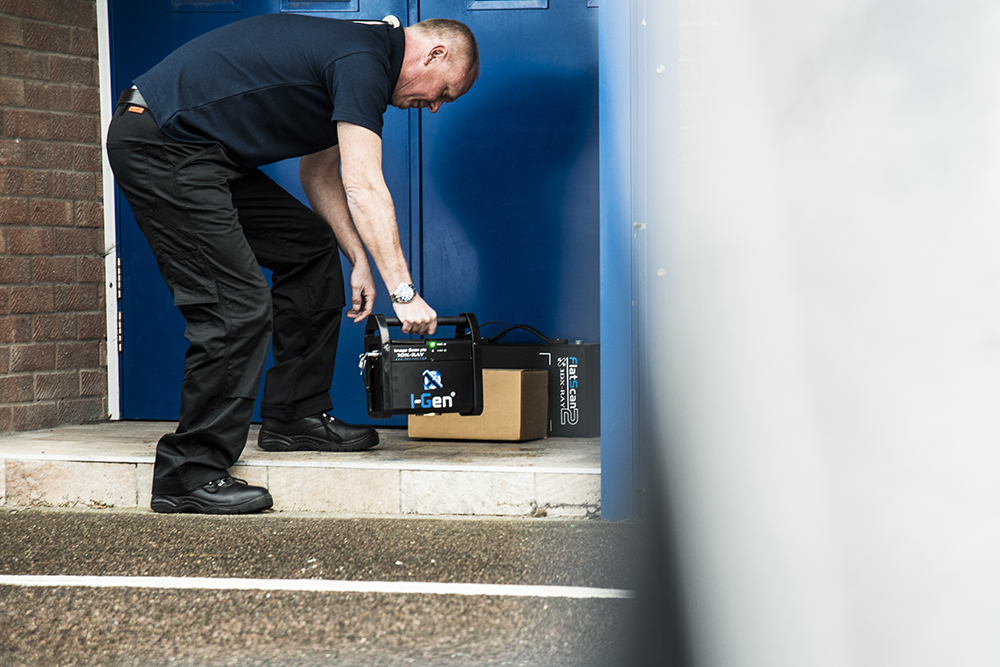
Are X-ray security scanners actually safe?
It is a common question asked by organisations that are considering X-ray screening technology. In short, the answer is yes.*
Modern X-ray security scanners are designed with multiple layers of protection and operate at low radiation levels. So, when they are maintained well and used correctly, they pose no significant risk to operators or the public.
However, understanding how these systems work and how radiation exposure is measured can help organisations make informed decisions about their use.
* To ensure safety, all rules and regulations must be obeyed. The equipment must be regularly maintained and checked. Industrial and security X-ray systems must not be used on people or animals.
How Do X-Ray Security Scanners Work?
X-ray security scanners use controlled levels of X-ray radiation to create an image of an item’s contents. This allows security personnel to inspect objects quickly and safely while minimising disruption.
We’ll explain the process in 4 simple steps, using an airport luggage scanner as an example:
1. X-Rays Pass Through an Object
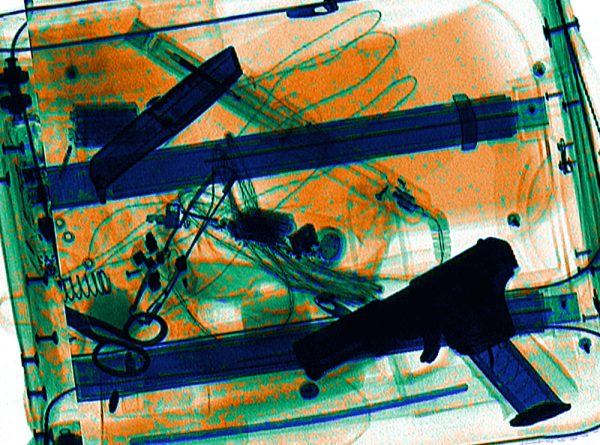
When an item is placed inside an airport security scanner, a beam of X-rays passes through it. Different materials allow different amounts of X-ray energy to pass through.
2. Dense Materials Absorb More Radiation
Dense materials such as metals absorb more X-rays, while less dense materials such as clothing, paper, or plastics allow more X-rays to pass through. This difference in absorption helps create contrast within the image.
3. The Detector Captures the X-Ray Image
On the opposite side of the object, a pair of detectors captures the X-rays that have passed through. The first detector provides information on the X-rays’ position and energy, and as they continue to the second detector, the low-energy rays are filtered out.
Advanced software then converts the information taken from both detectors into a detailed image that reveals the internal contents of the item.
4. The Operator Analyses the Results
Trained operators review the image to identify what is inside the item. Image enhancement tools, such as the colour coordination of different materials, are used to improve clarity and assist in decision-making.
Measuring Radiation Exposure
Radiation exposure is measured using a unit called the Sievert (Sv). It is the SI unit of absorbed dose and is equal to one Joule per kilogram or 100 rems.
Because a full Sievert represents a very large amount of radiation, exposure is normally measured in much smaller units:
- 1 sievert (Sv) = 1,000 millisieverts (mSv)
- 1 millisievert (mSv) = 1,000 microsieverts (µSv)
There are two main safety procedures for measuring X-rays.
- For people who regularly work with radiation sources, a film badge is worn. It measures the built-up X-ray dose over time and is sent to a laboratory for analysis and monitoring.
- Most industrial X-ray systems are screened using lead to prevent X-rays from escaping. X-ray meters check for any escaping X-rays.
Typical Exposure Levels to X-rays and Natural Radiation
We are consistently exposed to X-rays from natural sources and human activities.
The table below shows the level of exposure that we normally receive and the levels that are dangerous.
| Radiation | mSv |
| 3DX-Ray’s AXIS™-CXi Cabinet X-Ray System | Less than 0.0005 an hour |
| Chest x-ray | 0.014 |
| Fluoroscopy | 60 |
| Chromosome changes | 100 |
| Radiation sickness | 1000 |
| Possible death | 3000 |
| mSv / year | |
| Average (UK) natural radiation | 2.7 |
| Occupational dose limit | 20 |
The table highlights the significant difference between everyday radiation exposure and the levels associated with adverse health effects.
Most people are exposed to natural background radiation throughout their lives, and professionals working with radiation operate under strict regulatory limits designed to keep exposure well within safe levels.
Do X-Ray Scanners Leave Radiation Behind?
Once the scan is complete, there is no residual radiation left on bags, packages, equipment, mail, or other inspected items.
X-rays are a form of electromagnetic energy that passes through an object to create an image of its contents. Unlike radioactive materials, X-rays do not remain inside the object after the scan has finished. This means that items screened by a security X-ray system can be handled immediately after inspection without any risk of carrying or emitting radiation.
A useful comparison is taking a photograph with a flash. The light illuminates the subject momentarily to capture an image, but the light does not remain on the object afterwards. In a similar way, X-ray radiation is only present during the scanning process itself.
This is why X-ray inspection systems are used every day in airports, transport hubs, government buildings, and mailrooms: the technology provides a safe way to inspect suspicious items without causing any lasting changes to the objects being scanned.
Regulations That Keep X-Ray Systems Safe
X-rays and other forms of radiation can be dangerous unless they are managed properly. Governments across the world have developed their own radiation regulations. These ensure that systems are safely installed and operated.
X-ray security scanners are officially safe according to the European Commission Health and Consumers scientific committees (Conclusion 6: Are X-ray security scanners safe?). To quote:
“At the levels typical of X-ray-based security scanners, only stochastic effects could occur, but the predicted probability of their occurrence is very low, and there is no scientific evidence supporting their existence.”
How 3DX-RAY Designs Safety Into Its Systems
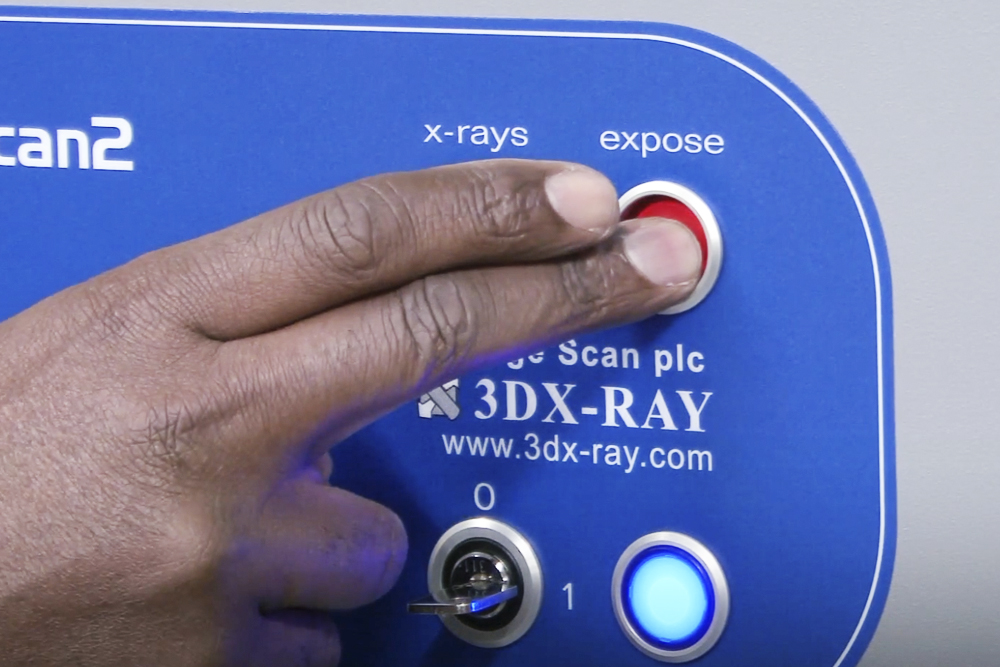
At 3DX-RAY, safety is a fundamental consideration in the design and operation of every piece of equipment that we create.
Built to Meet Rigorous Quality Standards
X-ray security systems are utilised in environments where reliability and safety are of utmost importance. To support these requirements, 3DX-RAY operates an independently certified quality management system that meets the requirements of ISO 9001:2015. Every X-ray system undergoes testing and certification before deployment, helping to ensure quality and dependable, safe operation for those who purchase our products.
Many of our ThreatScan® portable X-ray systems also carry NATO Stock Numbers (NSNs), demonstrating their acceptance for use by military organisations worldwide. NATO codification provides additional assurance that these systems have been recognised as suitable for some of the most demanding operational environments.
Ongoing Maintenance and Testing
Safety doesn’t end when an X-ray system is deployed. Regular maintenance and inspection are essential to ensure that equipment continues to operate safely.
3DX-RAY supports customers throughout the lifetime of their systems by providing servicing, technical support, software updates, repairs, and guidance on routine testing requirements.
Training and User Support
Safe operation starts with knowledgeable users. 3DX-RAY provides training and support to help operators understand system functionality and safety procedures. This allows users to make the most of their equipment while maintaining safety standards.
By combining robust engineering, regulatory compliance, ongoing support, and operator training, 3DX-RAY helps organisations deploy X-ray security scanners safely and effectively across a wide range of applications.
Discover the Right X-Ray Solution For You
Our team can help you identify the equipment that best aligns with your operational requirements and answer any questions you may have about system safety, compliance, deployment, and ongoing support.
Explore our range of X-ray security scanners or contact our team to discuss your requirements.